

Rhein-Main green techs: business can save the climate. And still be a business.
Rhein-Main green techs: business can save the climate. And still be a business.
Two days ago, the Intergovernmental Panel on Climate Change released a special report on Global Warming, where more than 91 authors from 40 countries conveyed on the impacts of global warming and how important is to strengthen the response to the threats of climate change. And startups are also playing a relevant role within this challenge.
Sustainable development, implementation of new processes, and providing new solutions to preserve ecosystems around the world are just some of the ways in which startups are revolutionizing the Green Tech industry and – in the same way – helping to achieve the ambitious objectives of the Paris Agreement. Additionally, according to the Environmental Technology Atlas for Germany “environmental technology and resource efficiency reached a global market volume of EUR 3,214 billion in 2016, with energy efficiency standing out as by far the biggest lead market in this cross-sector industry. Growing global demand for green products, processes and services is continuing to drive expansion in the world’s green tech market volume. Environmental technology and resource efficiency will grow by an average of 6.9 percent per year in the period from 2016 through 2025. The global volume for green tech will thus reach EUR 5,902 billion in 2025.”
Since the Rhein – Main region is not all about financial services, Banks and Artificial Intelligence, the region also supports – trough different alliances – the growing Green Tech startup scene and – in case you have not heard about their interesting business proposal – we would like you to pay attention to the following startups of the region:
Aponix: Based in Heidelberg, Aponix Gmbh has developed a vertical barrel system that extends the de-facto standards of soil-less plant cultivation from the horizontal plane into the 3rd dimension at professional standards. Ready to be used in urban farming situations and utilizing an existing nutrient cycle, the barrel system allows to create for example: In 1 square meter with 2,30 meters of vertical space the barrel is able to provide 144 individual grow spaces. The mission is to eliminate food miles and waste around food logistics and at the same time delivering more varieties harvested at the ideal ripeness to consumers delivering much higher nutrition and more fun.
Bikuh: Climate friendly advertising that doubles your impact and makes cycling profitable for bike riders. That is what Bikuh the social enterprise supported by Social Impact Lab and Climate KIC is implementing in Frankfurt am Main . The startup has developed a clever business model that benefits all involved parties, but especially the environment. A project where social responsibility is the driving force to create a better future. According to the founders “Bikuh makes biking more attractive as we create new incentives. For our advertising partners, we offer a whole new manner to get in contact with their target group. And at the end the environment benefits from this mix”.
Node. Energy: Located in Frankfurt node.energy is a digital service provider which enables microgrid operators to identify, map and manage the optimal power supply concept. With a product oriented solution and lead by Mr. Karger (co- founder of Node.Energy), the former participants of the EY Start Up Academy, offer with their software the possibility that industrial and commercial companies can reduce their energy costs and also their CO2 footprint.
All over the world, environmental technology and resource efficiency products, processes and services will be increasingly in demand in the coming years. Be sure to connect your ideas and business perspectives with likeminded individuals, accelerate your venture and access to investment opportunities with the right network.


Founder Insights with Stefan Maas from Pitch Club
Founder Insights with Stefan Maas from Pitch Club
As part of our “Founder Insights” series where we get to know local startups and initiatives shaping the Frankfurt ecosystem, we recently sat down with Pitch Club Founder Stefan Maas. In this interview, Stefan shares with TechObserver his personal entrepreneurial journey, his perspectives on investors backed ventures and why you should implement your minimum viable product as soon as possible.
Pitch Club is all about presenting your idea to the public, raising money from investors and ultimately becoming a successful and profitable venture. Let’s turn the tables a little bit : Stefan, how would you pitch Pitch Club? Tell us a few words about yourself, how the idea started and what is Pitch Club’s role in the Frankfurt startup ecosystem?
Short intro of myself: I studied in Germany, UK and Spain – MSc in Int. Management -, while working for an investment holding focusing on Eastern Europe. Afterwards I started working for Private Equity (P/E) companies and later became Managing Partner of a P/E boutique in Frankfurt am Main. There, I identified, financed and co-founded investment targets, structured them and finally developed and executed tailor-made exit strategies. Therefore, I am familiar with both the startup/founder and investor sides. In early 2014, a good friend of mine had just started his venture and was searching for investment opportunities. We started with the first edition of the classical Pitch Club (startups vs. investor). As the money-raising opportunities, especially for early-stage startups, were very limited at the time, we came up with the idea of an informal and unconventional invite-only event, to which investors and startups have to apply in order to guarantee the quality required. We convinced many strong partners like Deutsche Bank, Beiten Burkhardt and Brain-artist to get on board and have been working with for many years now. So far, the metrics confirm our approach: 15 editions, 155 preselected startups, +25 Mio. € funding, 40 % funding ratio.
With the traditional Pitch Club, we are acting as facilitators and helping to partially fill the financing gap. On the other hand, we foster innovation as we match innovative startups and corporates vice versa. In addition, we hold workshops/keynotes (e.g. pitch content, financing and strategy workshops for Bosch, Deutsche Bank, PwC, KfW, Accenture, Blackprint Booster, Climate-KIC and many others), bringing our experience and expertise to both the corporate world and startup community. Besides, Pitch Club offers complementary services for startups, investors and corporates (e.g. scouting/sourcing of startups for corporates and investors, company builder for startups). In 2017 we adapted the traditional Pitch Club concept to recruiting with the “Pitch Club Developer Edition” (PCDE). PCDE, which was carved out as a spin-off in 2018, is a reverse recruiting event with 20 editions a year in whole Germany/Europe. At PCDE companies – MNCs like Daimler, SAP or PwC, SMEs like Zooplus, Trumpf or Basler and startups like Campanda, Ce-lonis or TeamViewer – pitch their IT jobs in front of pre-selected software developers in unconventional locations like bars and clubs. Due to our excellent access to developers and companies and the high market demand, we also match actively appropriate candidates with companies. Finally, a platform digitizes and scales the whole process.
In the future, more startups will be created in Frankfurt. To sustain that growing number, the region will have to increase the available early stage investments to keep up with that growth. How do you see the private and public investments in the Rhein-Main region in comparison with other German cities/metropolitan regions?
From my point of view the FRM region offers theoretically the perfect funding opportunities for startups, as Frankfurt is one of the leading financial centres worldwide. However, many of the established finance players are not very keen to invest in startups in such an early-stage. Still a significant number of seed-/early-stage startups is funded by High-Tech Gründerfonds (HTGF), which is subsidized and initiated by the German government and supported by some of the big German MNCs. Consequentially, there is substantial room for improvement and we see many CVCs coming into the sector as the region is home to a lot of flourishing industries, which have the challenge to master digitization, many of them with the support and a strategy of financing into startups. If you compare the FRM ecosystem to Berlin, which is undoubtedly the number one startup hub, and also look at Munich and Hamburg, FRM lacks unicorns. These act as role models locally and help attract investors from abroad. Due to TechQuartier and many other initiatives, the situation has already enhanced, but still a lot of work to do in order to exploit the enormous potential. For instance, tax deductions for investors, but also subsidies/grants and the accessibility to it could be improved significantly, if we consider the public role.
From your perspective now as a founder and from your previous work experience in Private Equity, what are the main characteristics that an investor backed idea should have?
- Timing – you can always find window of opportunities in specific industries, which are dependent on time and thus, enable abnormal returns and opportunities due to market momentum. If founders hit that crucial point in time, the opportunity to succeed increases tremendously.
- Depending on the investor type, scalability (especially for VCs) and the ability to execute the business model are highly decisive factors.
- Team – nothing new, but complimentary team skills, outbalancing strengths and weaknesses, are one of the key success factors. As the founders usually have to iterate many times, especially in the seed/early-stage phase, endurance becomes one of the major skills.
The strategy of the region is to raise the number of startups in the next five years and becoming an international entrepreneurial hub, but this cannot be achieved without leveraging the entrepreneurial mindset and ambition of international students, immigrants and of course competing with the attractiveness of the corporate world. Are there any words that you like to share with those who are not sure yet to take the leap and start their own venture?
I cannot promise you success with your own startup/venture, but for sure it will be a lot of fun along the way! And a rollercoaster of emotions for free, if you start your own venture and see it (hopefully) growing. Lessons learned on the way are indispensable for everyone, even though not everyone is made to be (and needs to be) an entrepreneur with the specific mind-set necessary. And finally: Just do it and start working and implementing your idea yesterday, but do not forget to test your hypothesis with a first MVP (minimum viable product) as soon as possible on the market/target group!
Next Pitch Club #15 Female Edition on 12th of September 2018 at the TnT-Palais in Frankfurt am Main.
To participate at the invite-only Event of the Pitch Club as an investor, you need to apply. Since spots are in high demand and capacity is limited, a timely application is recommended.
Further Information under: https://www.thepitchclub.com/de/investoren/. As a startup founded by woman, an application under https://www.thepitchclub.com/de/startup/ until the 2nd of September 2018 is possible.
Next Pitch Club Developer Edition #19 on the 22nd of November in Frankfurt am Main
If you as a software developer or IT-Professional would like to take part at the invite-only event (free drinks and food included), you can apply under: www.pcde.io/?q=tq.
If you would like to take part at the afterwork party starting at 8pm, you can apply under: https://pcde.io/pcde-afterwork/

Founder Insights with Friedhelm A. Schmitt from Fincite
Founder Insights with Friedhelm A. Schmitt from Fincite
Friedhelm Schmitt, Co-CEO of Fincite, shared his insights with regards to developing a venture, creating an appropriate team culture, and how bootstrapping can transform a company into an award-winning top player in the Frankfurt FinTech scene. Throughout the interview, Friedhelm shares his personal experiences throughout the founding of Fincite and how the company has become what it is today. Responsible for Operations, Partners, and Product Development, Friedhelm explains that his two years of industry experience convinced him to take a risk.
“By looking asset management and seeing how non-digital all of these processes were [and] seeing how almost everything was Excel-based, we saw a business opportunity in asset management to eventually shape a product” he explains.
His vision lead the Fincite team to become pioneers in the FinTech scene in Frankfurt: “Seven years ago, there was a tendency for changes in several industries and I asked myself ‘Why should banks be any different from other industry?’”, he says. Even though the days in the beginning of development were tough, these challenges gave the founders the required strength, basis, and inner confidence to recognize that they were on their way to success.
Regarding customer acquisition and traction, he explains that Fincite differentiates itself in comparison to other FinTechs in the Frankfurt ecosystem as follows:
“To date, we are purely self-financed, 100% owned by the founders,” Friedhelm states. “We were also very lucky to have very good clients that shared our market vision since the beginning of the journey”.
Watch the video below to discover more information about the upcoming objectives, the client-base expansion, the challenges with regards to regulatory regimes, and methodologies for scaling and growth while maintaining quality as well as team & client satisfaction within the Fincite community.
Want to learn more about Frankfurt Rhein-Main founders? Feel free to check out our interviews with Matthias from node.energy, and Smartkarma co-founder Jon Foster.
Innovate, disrupt and be a pioneer. Lessons on how to keep an ecosystem for 200 years
Innovate, disrupt and be a pioneer. Lessons on how to keep an ecosystem for 200 years
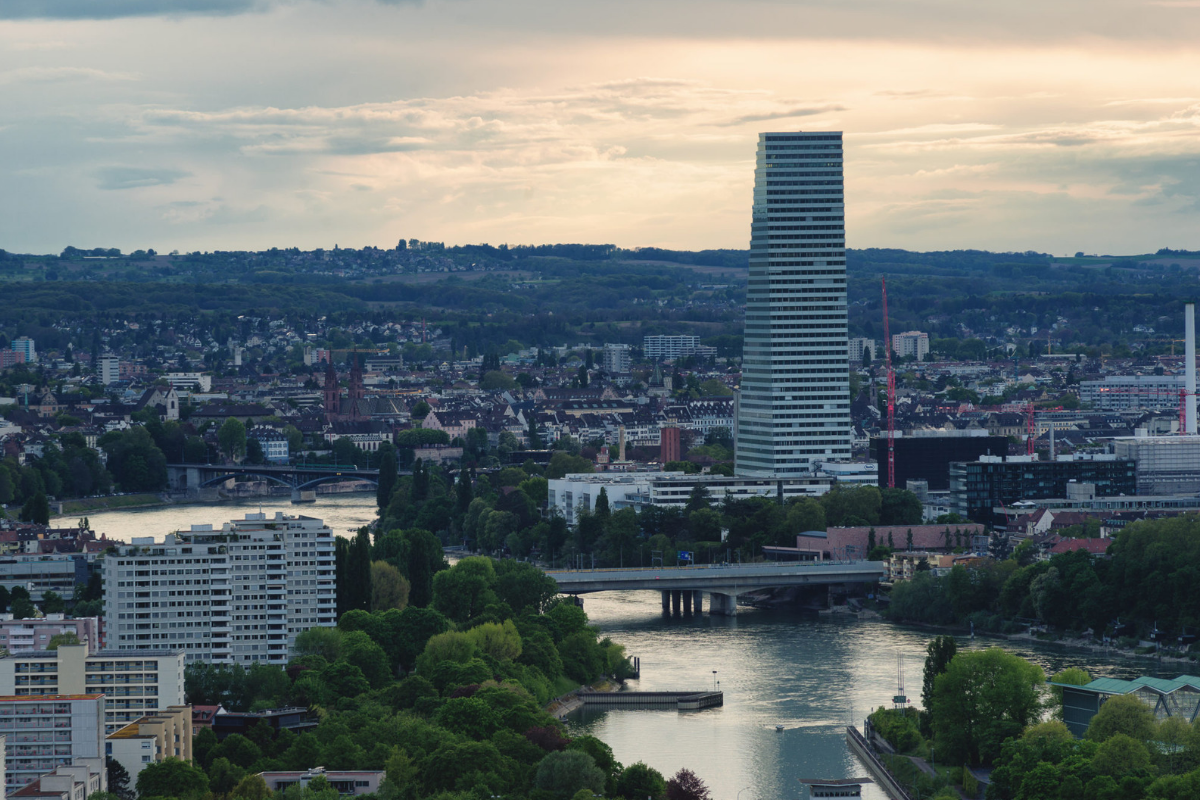
Howard Yu, Lego Professor of Management and Innovation at IMD Business School in Switzerland and the author of LEAP: How to Thrive in a World Where Everything Can be Copied explains and discusses on his book, how the industrial cluster in the Swiss city of Basel is a unique example of enduring competitive advantage. Since Frankfurt startup ecosystem is growing and being the most important financial cluster in continental Europe, we believe that there are some lessons to be learned and that the Rhein Main region can take advantage from the southern city experience.
Frankfurt and Basel share not just the Rhein river shores. Both cities have endured through centuries as the predilect location for the pharmaceutical industry and for the financial services industry and banks. Novartis, and Hoffman – la Roche in one shore, Metzler and Hauck & Aufhäuser on the other. Having so much in common seems fair to question ourselves which the source of success of the pharmaceutical companies is and how have they enjoyed so much prosperity and stayed on top for centuries. According to Professor Yu, the answer relies on the fact that “this companies never stopped to innovate, and they embraced change via revolutions, explorations and a continuous modification on their objectives”.
Companies must innovate. No value proposition stays unique forever
According to Yu, “for the past decades, the dominant thinking among executives and managers is to create a market position and a competitor strategy. This is so entrenched -he says – “that you want to build up a defensible competitive position, to build a structural barrier and to protect your business against competition over a long period of time”. Yu says that “this a mirage because no value proposition can stay unique forever. What we see through different industries (automotive, mobile phones, heavy machinery textile) is that inevitably expertise, capital and know-how migrate from one country to another”. Interestingly Basel´s companies are settled in the same location for almost two hundred years. They continued to reinvent themselves, to stay competitive and to fan off other low-cost competition.
Take a leap into other disciplines
As seen in Basel, companies cannot develop and improve processes if they do not take a leap and decide to lead innovation processes. Pharmaceutical companies continuously changed their focus moving from organic chemistry into microbiology and today their research is focused on genomics. Robo advisors and mobile wallets could represent examples on how banks and financial services have changed to promote initiatives that solve customer issues through FinTech initiatives. “Recurrent or continues leap from one discipline to another allows pioneering companies to stay on top of competition and is essentially opening to a new discipline what represent a new path for growth so that the late comer and the copy cats always have hard time in catching them up”. Corporates can cooperate with startups to innovate and create new solutions for customers – a good example of that is ING DiBa Strategy and Innovation team an how they implement innovation strategies on an operational level.
Empower the middle manager and disrupt
But, what causes some companies to be pioneers and prosper for a long period of time versus others being swept away? In Yu´s view “The idea to empowering middle manager to experiment with different initiatives around a new knowledge initiative, can have a huge impact in an organization. But willing to make small scale experimentation – from R&D to product development- and then no one finally makes the call or pull the trigger and move from an emergence strategy into a deliver strategy – can hurt potential programs despite the potential long term pay off”. Basel pharmaceutical industry have leap ahead and took an innovative approach in those terms. What companies realized, is that the past pre- knowledge can help you to understand the future, but to complete disregard of the past and forget about everything that you had as unique asset and never reimagine how to repackage this unique asset for future use – that is a big pity”.
Do not be afraid of disruption and to modify industry paradigms
Companies must understand that disruption often is a real threat, but not the only one. “In fact, even when an industry seemingly stays constant – if the pioneering company doesn’t leap to new knowledge discipline sooner or later, its financial resources or its market positioning would get threatened. As part of the Digital Hessen Strategy, and creative arena and melting pot for entrepreneurs and innovators from the financial industry in the Rhein main startup ecosystem, TQ supports innovative companies that are disrupting the market such as Tradeshift and Smartsteuer GmbH and PayDirect . The Rhein Main region can take advantage of Basel experiences and industries, their know-how, and ultimately to understand that no value proposition can stay forever and how an ecosystem can beat the competition, innovate and continually jump to new capabilities and thrive for generations.
Network, alliances and partnerships are also relevant to succeed, but most importantly a community that supports and brings together academia, funding and corporates can be a decisive factor on the success of your venture.
For more insights about the startup ecosystem of the Rhein Main region, theMasterplan and our ecosystem, we invite you read about our members,acceleration programs and some firsthand experiences from our community.
Scaleups in European Tech: Numbers are Growing But We Need to Multiply Our Efforts
European Tech Scaleups: Numbers are Growing But We Need to Multiply Our Efforts
Established by the European Commission at the World Economic Forum, Startup Europe Partnership (SEP) is the first pan-European open innovation platform dedicated to transforming European startups into scaleups (> USD $1M funding raised (since foundation) and at least one funding event since 2010). By linking them with global corporations and stock exchanges, SEP is a program where companies can access to technologies, initiate business partnerships and venture corporate investments. Released two weeks ago in cooperation with Mind the Bridge, Tech Scaleup Europe Report 2018 shows that even though there is good progress and the number of scaleups is growing, we have a lot of work ahead of us to be a startup continent.
Sustainable growth from scaleups in Europe is expected to continue
In 2017 scaleups experienced a year of growth which can be described as sustainable and can be expected to continue. Creation of scaleups gained ground last year, with a 28% increase in scaleup volume and a 36% increase in capital raised, meaning more than 1,200 new scaleups in 2017 and USD $22B more poured in scaleups. Upon this numbers the “scaleup density ratio” (0,9 to 1 per 100k Inhabitants) and “scaleup investing ratio” (0,33% to 0,45% of GDP) also increased their percentages, showing that European scaleup economy is growing in absolute terms.

There is not yet a single European way to scale-up for tech companies
Scaleups behave differently according to their ecosystems, countries and regions. In the US for example the route is standardized and there is an expected plan to exit for every startup. In Europe, there is not yet a single way to scale up for tech companies. Some are pursuing the venture capital funding path, whereas others are leveraging investors and family offices. Crowdfunding and fundraising through cryptos (ICOs) have also become ways to access capital, which makes European levers for scaling up diversified and far from standardized.
1220 new scaleups were born in 2017, led by the UK, France, Germany and Sweden
The UK, France, Germany and Sweden are the leading European countries in scaleup numbers, contributing to almost 70% of the total growth in absolute terms. We continue to see the importance of these traditional economic power in the European innovation scene. The UK leads Europe in scaleup numbers (1,168), followed by France (681), Germany (530) and Sweden (489). Regardingcapital invested, the UK leads the amount of invested capital with USD $27.5B, and even though Germany is home to only 10% of scaleups, those scaleups took in 18% of the total funding in Europe. By producing on average 3.7 scaleups every 100k inhabitants, the Northern countries outperform other areas of the continent and Sweden (4.9 scaleups/100k inhabitants) and Finland (4/100k Inhabitants) are the leading countries in terms of scaleups density.
A notable performance is that of Eastern Europe, which has become a hot area in the past year. Perhaps this is where the most impressive percentages can be observed; they managed a 40% growth rate, adding 63 scaleups to a total of 220 now present. The region has gained recognition for the relatively lower cost and high-quality workforce, especially for developers.
Most of the total funding capital comes from VC and private investors
While there are major differences between Europe and the US regarding the funding channels (VCs, IPOs, ICO) there are also noticeable differences between European regions and individual countries. These differences are a critical element to understand the total innovation economy of Europe and its growth potential. Acknowledging that USD $70.7B of capital poured into European scaleups comes from venture capital and private investors (85% of the total capital), European scaleups are still depending more on venture capital than any other funding sources.

Venture exits via the public markets are very much the exception, not the rule
Stock markets are not yet a widespread and accessible growth financing option for European tech scaleups, particularly in continental Europe. This situation poses a problem, because beyond providing growth capital, IPOs offer exit opportunities to the VC funds. Without exits, the venture capital engine risks being flooded. While only 12% of the capital raised by scaleups (USD $9.7B) comes from stock markets through IPOs, only 1% of the European tech scaleups have gone public. A larger involvement of the stock market would provide and important boost for European scaleups considering that on average, European scaleups collect about USD $120M in new funding when they start trading on stock markets.

ICOs: The Third Way?
ICOs allow speed and availability when it comes to funding for scaleups. Tech scaleups looking at trading into crypto current markets file for an ICO within a year of inception, and 3% of the capital raised last year (2.8B) was through ICOs. Central European countries – driven by Switzerland – play a dominant role (1.3B raised, 50% of the total) and as example of that, the swiss canton of Zug (European Crypto valley) has 27 scaleups that made an ICO headquartered there having raised USD $1B+. For the first round of financing, tech scaleups ICOs have proven to be a very interesting substitute to other forms of financing (VC, IPOs).
Interestingly, on average the ICO channel provides 4 times more capital than the generic series A raised with traditional VCs (USD $17,6M / USD $4.5M) and while ICOs are “democratizing” fundraising as they are accessible by scaleups in geographies (e.g. the CEECs and the Baltics, where they represent respectively 20% and 33% of capital raised by local scaleups) there are definitively other implications to take into consideration:

European scaleups tend to be based in the capital city
Scaleups tend to be concentrated around few major hubs where supporting ecosystems such as academia, financing, and an entrepreneurial spirit are strong. London is by far the largest, with over 1,100 scaleups based there. Paris follows, and Berlin and Stockholm are slightly behind. Typically, there is one main hub per country, generally around the capital city. Beyond these main scaleup hubs there is another tier two cities and municipalities whose role cannot be neglected.

Europe must multiply their efforts to become a startup continent
To understand our competitive advantages and where we are compared to other innovation economies, we must observe the information of US and Israel. As of 2017, 20,760 scaleups were tracked in the US, meaning approximately a number four times higher than Europe. US scaleups have raised USD $657.5B since inception, eight times more than the USD $83.2B raised by their European counterparts. And, in terms of commitment – meaning percentage of GDP invested – once again the US shines, with investments in scaleups equaling 3.53% of GDP, compared to 0.45% in Europe, almost eight times more. Israel scores better than all European ecosystems (except only the UK) in scaleup population size with 748 tech scaleups. Our competitive advantage is to be united in diversity. Advantage that can only be realized by working at ecosystem level, combining public and private initiatives, encouraging entrepreneurship in universities and strengthening cooperation within startups and corporates.
Innovation and Startup collaboration – Interview with Liesa Feis and Wiebke Drescher from ING DiBa
Innovation and Startup collaboration – Interview with Liesa Feis and Wiebke Drescher from ING DiBa
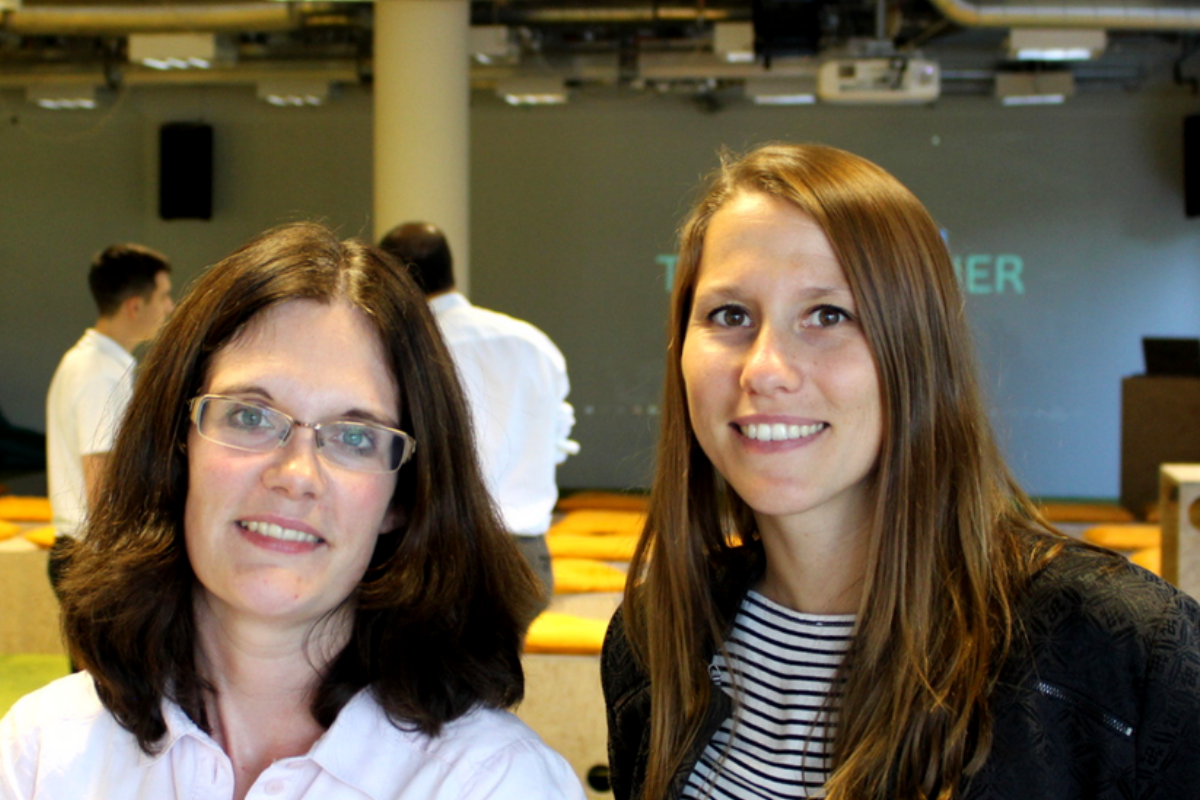
TechQuartier recently had the opportunity to sit with Liesa Feis and Wiebke Drescher, both members of the ING DiBa Strategy and Innovation team. They shared some interesting insights about ING DiBa’s innovation methods, agile transformation, experimental thinking, and their involvement in Frankfurt’s startup ecosystem. After our previous interview with CEO Nick Jue, it was great to get the perspective of the people in charge of implementing the innovation strategy on an operational level.
Liesa and Wiebke are 2 out of a 9-member department at ING DiBa. Both are working as FinTech consultants. The innovation team was created in 2016, its main objective being to test new ideas. Currently, ING-DiBa is in the middle of the agile transformation — a transformation that is scheduled to be completed by September 2018, according to an interview with CEO Nick Jue.
As a team, they strive to create an organizational structure through an innovation method called “PACE” which is based on concepts of design thinking, agility, and scrum. As a preparation to her current role, which involves sitting with managers and startups and figure out the best way to generate value-adding collaborations, it is interesting to know that Liesa participated in a 3-month acceleration program with an innovation coach who taught her about open innovation and design thinking concepts, innovation strategies which today have been incorporated into ING DiBa’s own methods.
Their team is focused on experimentation, validation, iteration adaptation and rapid evolutions. Within their team, their belief in “experimental thinking” requires projects to be built, written down, tested, and feedback to be generated and shared quickly for rapid pivots and improvements. It’s a classic pillar of the Lean Startup method, the ”Fail Fast” principle. For efficiency, projects are divided amongst small teams and subteams who work on different topics, build prototypes, and develop hypotheses. Their efforts are directed towards creating solutions for customers through problem-based approaches.
ING DiBa is involved in Frankfurt’s ecosystem through their efforts toward creating startup partnerships and promoting initiatives to solve customer issues. Wiebke explains that their team does not simply scout FinTechs as some would assume—ING DiBa is a progressive bank, but not everyone within the company is necessarily interested in the same FinTech initiatives. Although the team must have an “entrepreneurial mindset”, startups with innovative or “cool ideas” do not always have the qualifications to immediately be pushed into banks such as ING DiBa. These “cool ideas” require a convincing pitch as well as the ability to fulfill actual need or fix an actual problem.
There are three important steps for the Digital Strategy and Innovation team to take when making startup partnership decisions:
- Recognize problems and demands—find solutions.
- Submit the appropriate solution through recognition of opportunity, market research, and finding global teams that could contribute.
- Provide advice in the best interest of the startups and customers (not ING’s) and do research to support judgment on whether a startup collaboration is worth it.
Many startups experience difficulty in expanding their visibility as a result of a lack of access to resources. However, some helpful tools to search for startups include Tracxn, Deutsche Grunderszene, CB Insights and Crunchbase (not Google—it is much too expensive for most startups to advertise).
Dissimilar to corporate work environments, Liesa and Wiebke describe their innovative team as colourful and laid back. This type of environment has become very attractive to many young entrepreneurs, students, and interns. In order to promote the same in more corporate environments, coaching is incredibly important for both staff, in how to approach startups, and for startups, in how to be formal and professional in their interactions with corporates. By doing this, there will be an increased likelihood for increasing innovation and agility in work environments.
FinTechs are currently the heart of Frankfurt’s developing startup ecosystem. This focus on Fintech is essential to the region’s success, creating a deeply integrated cluster that has a tight knight community, strong industry links, proven expertise and international reach and connectedness, as demonstrated in the 2018 Frankfurt Startup Ecosystem Report.
“I have worked in a bank since 2011, and FinTech did not even exist… FinTech is becoming more transparent, and many FinTechs from the region are becoming successful and profitable within 3-4 years” – Liesa Feis, Innovation Project Manager at ING DiBa
The increase of startup partnerships with ING DiBa have convinced founders to have confidence in their ideas and to gain experience in a corporate environment. There are many exciting opportunities to come with ING DiBa in the near future as new industries of startups are becoming known. They are always on the lookout for a win-win : for FinTech companies, it is an opportunity to develop new theories and models, to test them by accessing large data sets which banks can provide.
All in all, there is a lot of potential for the team of ING DiBa to be a key drivers of growth in both the startup world and their company for years to come!
CEO Insights with Nick Jue, CEO from ING DiBa
CEO Insights with Nick Jue, CEO from ING DiBa
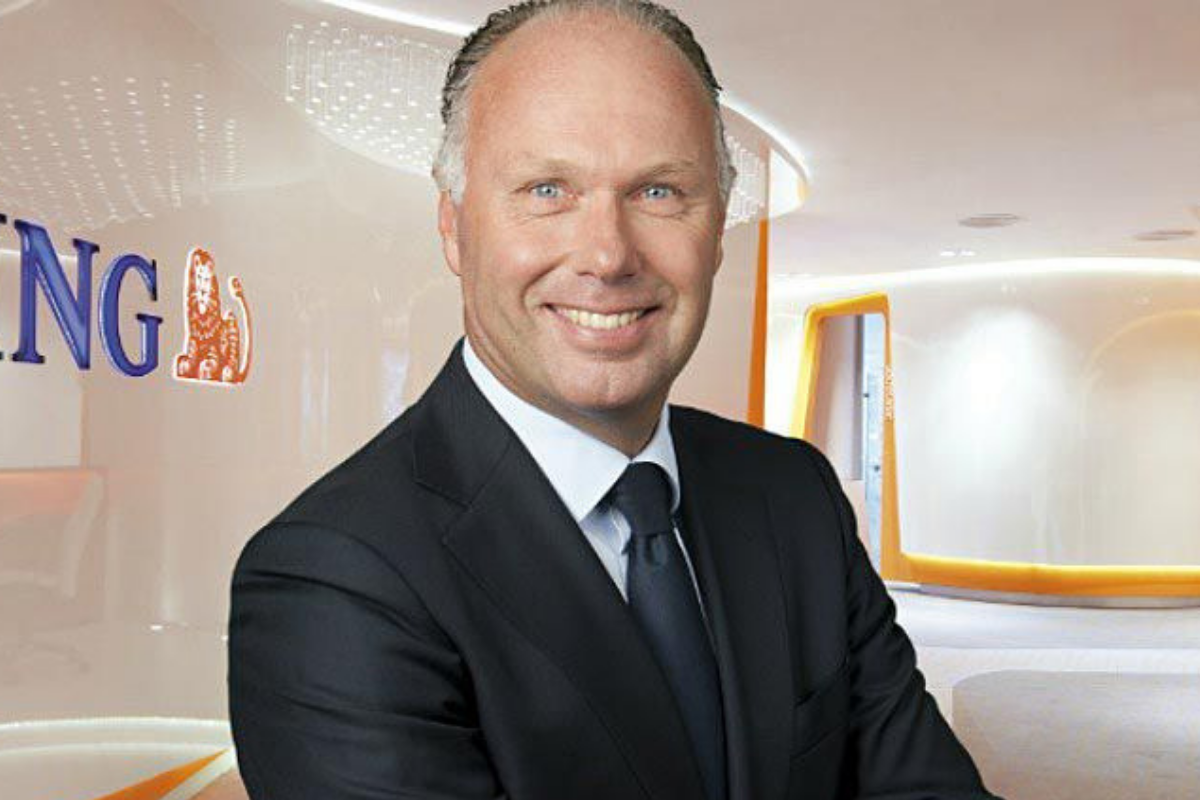
In our first ever edition of CEO Insights, TechQuartier sat down with Nick Jue, CEO of ING DiBa, to discuss subjects such as his view of future banking, startup collaborations, agile work environments, and leadership.
Before becoming CEO of ING DiBa, his professional career began as head of Marketing at Postbank. He moved to Belgium to integrate insurance companies within ING and was made head of Corporate Communication Strategy. For 11 years, he was CEO of ING Netherlands, but recently moved to Germany for his current title as CEO of ING DiBa.
As a result of his constant changing professional titles, Nick described his professional leadership style as being “driven by change”. He is motivated by agility and adapting to the varying environments he has experienced. He explains to people his view on the changing world and the importance of having a purpose.
At ING, they are in the process of transforming into Germany’s first “agile” bank through the appropriate structure, service, and sales. The development of a clear structure will make it likely for the implementation of agility in the coming months and years to come.
As a result of changing trends and developments in technology, the behaviours as well as the wants and needs of customers also change. ING looks to successful companies such as Spotify, Netflix, and Google to gather the best elements from each to help speed up their progress in providing customers with what they need.
FinTechs have a particularly interesting role in the transformation of the banking industry. They tend to disrupt the market, and are closer to customers than larger companies which makes fulfilling their needs more simple. Banks are able to use FinTechs to increase the speed in which they incorporate new technology into the company.
Overall, efficiency is a key element in the banking industry that must be practiced. For ING DiBa, Nick has observed that within the next 5 years, he hopes that ING DiBa will be the main go-to platform for people who need financial services—bringing the right services to the right customers through innovation and digitalization.

Launch of GreenTech Hub powered by TechQuartier and Finance in Motion
Launch of GreenTech Hub powered by TechQuartier and Finance in Motion
The greentech industry is growing at a brisk pace in Germany. According to a Roland Berger report which was cited by The Federal Ministry for the Environment, Nature Conservation and Nuclear Safety, the greentech industry in Germany is estimated to be worth €738 billion by the year 2025.
To propel growth of greentech companies in Germany, Frankfurt based TechQuartier-the collaborative innovation platform has partnered up with Finance in Motion-one of the world’s largest impact asset managers to launch GreenTech Hub on 27thof June 2018.

“Finance in Motion fosters entrepreneurship and green, sustainable economic development in low and middle-income countries worldwide, so it was a natural fit to join forces with the TechQuartier to launch the GreenTech Hub. We want to build a community of green tech leaders and are very happy to dedicate office space in our own building for that important purpose. We are looking forward to our cooperation with the excellent TechQuartier and to welcoming promising startups. All of Finance in Motion’s staff is keen on adding expertise to make the GreenTech Hub a success.’’
Elvira Lefting, Managing Director at Finance in Motion.
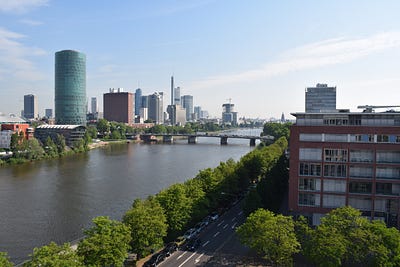
Located next to Finance in Motion’s own office on the bank of River Main, the GreenTech Hub is a centre dedicated to new enterprises catering to green technology, clean energy, green finance, sustainable production, development and distribution industries. The hub aims to provide entrepreneurs in greentech sector with key resources to become successful and impactful. Thus, the hub not only offers a targeted infrastructure but also provides valuable support in the form of networking opportunities, business development workshops, investor contacts and much more.
‘’The joint launch of GreenTech Hub marks the next step of our journey at TechQuartier. Not only are we expanding into another location, we are also providing a dedicated space to the greentech segment of our community and deepening our expertise in that promising field. In Finance in Motion, we found a partner that shared both our vision and ambition for this hub. By combining our knowledge of the tech space, our international networks and their deep expertise in impact investing, we feel that this is the beginning of a very impactful project.’’
Sebastian Schaefer, Managing Director of TechQuartier
The first startup to join the GreenTech Hub is TechQuartier’s very own node.energy.The startup works on the simplification of commercial management of microgrids. A graduate of the EY Startup Academy program organized in collaboration with Deutsche Börse and TechQuartier, they subsequently managed to secure a seed funding of 775,000€. Now gaining traction after having acquired their first business customers, the move brings them closer to other greentechs.

’For us at node.energy, renewable energy, digitization and finance lie at the core of our business. With the new GreenTech Hub, it is great to have a dedicated location to work and collaborate with other companies and startups with the same DNA. We are proud to be the first startup to join the initiative, and happy to continue pioneering the local greentech scene as part of the TechQuartier community.’’
Matthias Karger, Co-founder and CEO of node.energy
The current goal of GreenTech Hub is to find more qualified GreenTechs, not only in Frankfurt or Germany but also internationally, to occupy the space, provide industry knowledge, technical expertise and create synergies. Events and industry-specific programs will be organized at the Sachsenhausen location, keeping with the mandate of building competitive, scalable and environmentally impactful solutions.
To learn more about the GreenTech Hub, visit us at www.techquartier.com/greentechhub

Merlin and the Alexa project
Merlin and the Alexa project
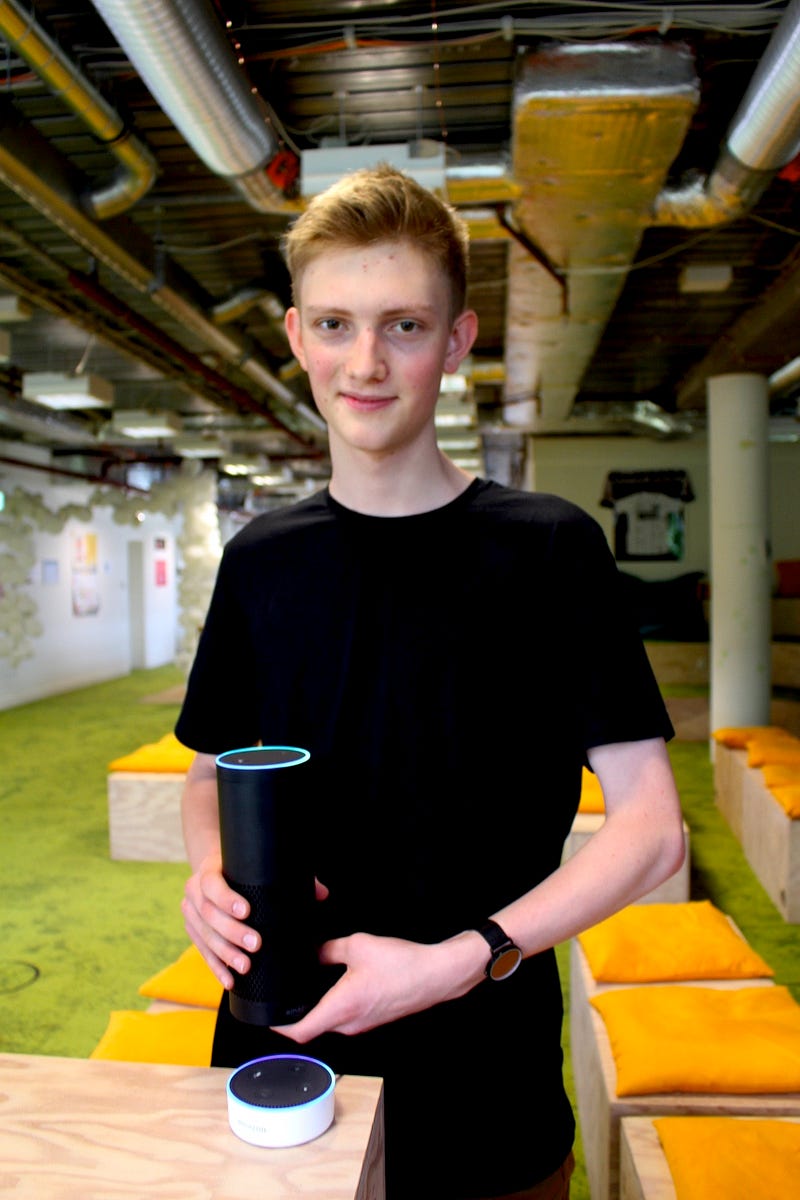
Today we bid farewell to Merlin Maas, an 11th Grade student at Georg-Büchner-Gymnasium who we had the pleasure of having with us for the past two weeks. As part of this short internship, Merlin worked closely with the team to help develop the use case for using Alexa at TechQuartier. We chatted with him about his experience.
Hi Merlin! Before you leave us to go on vacation, a few rapid fire questions. How did you find out about TQ and what made you apply for an internship here? As part of my studies we have to do a two-weeks internship in a company, in order to get practical experience. I was doing some research on the web about startups, I felt I wanted to try it out, and that’s when I found out about TQ. I wrote an email to Sebastian, he told me to come by and discuss what I wanted to work on, and that is when the topic of Alexa came up.
Right, can you tell us about the original idea, and what you found interesting about it?
Sebastian told me that he was curious about how we could work with Alexa, thinking about TQ’s community and the many guests that come by, he wanted to see how the experience could be improved. Since I have some skills in programming and was a bit familiar with the technology, we thought it was a nice fit. In two weeks, you don’t really have the time to work on a large project, so this was perfect.
What’s the plan now with Alexa, can our guests use it?
Yep! The pain point we can solve is that sometimes, the receptionist might have to leave her desk temporarily. TQ is also open 24 hours to members, so it’s possible people need help before or after hours. What we are finalizing right now is a list of the Frequently Asked Questions, the ones the TQ team gets asked most often, and which people will now be able to ask Alexa. We have two devices, because you cannot have two languages in one pod.
For example, questions like ‘’Where is this meeting room?’’ or ‘’Where does this startup sit?’’ are very frequent. People also want to know where to find the TQ team, where the bathrooms or printers are, when does this event start, etc. We have to populate a database with those questions as well as the answers, so the system will improve based on the questions we get most often.
How did you find the experience working at TQ?
I really like that I had a specific project to work on and that I was able to make progress on my own, which is not necessarily the case in all internships. I had some supervision and support, but I could also do a lot myself. I also very much liked the vibe in the office, and also to be in touch directly with the startup community.
_______________
A big thank you goes out to Merlin for his input we really enjoyed having him around! If you know someome who is looking do to an internship, we are recruiting on an ongoing basis. More information about it here : https://techquartier.com/about/careers/

Plug & Play Launch Event Overview
Plug & Play Launch Event Overview
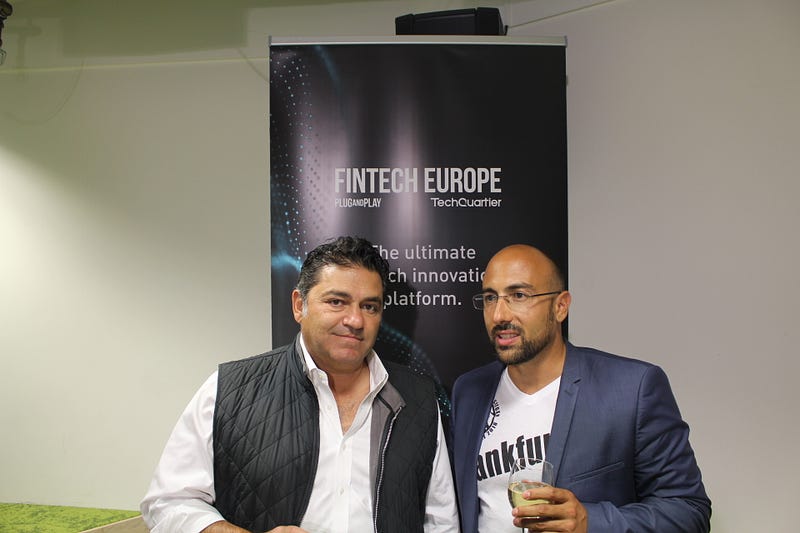
Plug and Play (PPTC) and TechQuartier launched the Fintech Europe – The ultimate fintech innovation platform on May 29th, 2018.
The goal of Fintech Europe is to revolutionize the financial services industry by working with the best startups and digital-driven corporations.
The event was kicked off by Plug and Play Fintech Program Director in Frankfurt, Fernando Zornig. Following Fernando’s opening remarks, TQ’s Managing Director, Dr. Sebastian Schaefer took the stage and gave a short introduction about TQ’s formation and TQ’s mission to become the leading multi-corporate innovation platform.
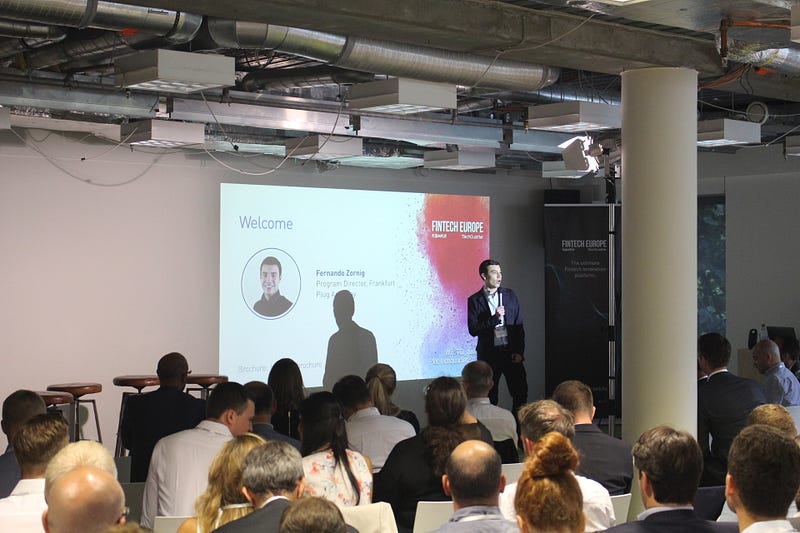
Marckus Pertlwieser, member of the Executive Board of Deutsche Bank Private and Business Clients AG, shared his view that a collaboration between banks and fintech firms is a mutually beneficial deal. He also stressed on the fact that proximity to regulators and access to capital are two important ingredients that position Frankfurt to become the leading Fintech hub in the world.
Following Markus’s note, Amir Karimpour went on to tell the origin story of PPTC and how they have grown over the past two decades. PPTC’s signature program in Germany with Diamler in 2011 propelled them to come up with more partnerships and strengthen their base.
PPTC measure success in Germany by considering the number of pilot projects and the projects which are in implementation phase. The objective of PPTC is to bridge the gap between Silicon Valley and other cities in the world and empower entrepreneurs in different cities become successful.
Saeed Amidi- “80% of startups want to help banks while 20% want to disrupt”
Saeed Amidi, CEO and founder of Plug and Play Tech Centre agreed with Markus that Frankfurt has all the right elements to become the biggest fintech hub in the world. His vision is to have a portfolio of more than 1000 successful startups by 2025.
The Panel
The introduction was then followed by a panel discussion moderated by Mr. Amidi. The participants were-
Jared Preston- Division Manager, Digital Experience and Data at Deutsche Postbank Group.
Ewan MacLeod- Chief Digital Officer, Nordea.
Jon Schäffer- Head of Strategy and Business Development at MobileLife, Danske Bank.
When it comes to banks having their internal accelerator program, Ewan was of the view that it sounds fancy and cool to have an accelerator program, but it is quite different to work with startups and an internal accelerator is costly and provides limited exposure. In such a scenario, partnering with an ecosystem makes more sense than going for an internal accelerator.
Jared said that for a lot of banks, partnering with a startup can be scary. The corporates think that the startups would eat their lunch but what they don’t see is that the size of the pie is not fixed meaning a partnership with a startup can create a bigger pie and bigger lunch for the bank as well as for the startup. So, partnering with a startup is actually a win-win situation.
Jon shared his view on open banking saying that it will not disrupt the existing banking landscape, but it will deliver more benefits. His advice for corporates was to always bet on those technologies that serve more people.
Saeed used an analogy to explain the advantages startups have over big banks when it comes to mobile banking. Banks are like huge ships managing big customers, so when they want to turn, it is a slow and difficult process. But when you consider startups utilising mobile banking, they are like boats, it is easier for them to make shifts.
Regarding the challenges faced by corporates, Ewan stressed on the fact that a lot of corporates usually see the big picture. Most of the time, the sponsor is unable to understand the underlying benefits a startup is going to bring. Jared added that founders must find the right sponsor at the right time.
Saeed agreed with Ewan and Jared and further called for a need to break down barriers in organizations as restrictions within an organization will not bring any change. He further said that organizations must make their culture more open and develop an attitude to include startups.
Jon, in his closing remarks, agreed that for founders, one of the biggest challenges is getting in touch with the corporates. His final advice was for founders to come up with technologies that can easily integrate with the banks.
Ewan’s closing remark for founders was short and simple- if the founders can’t get a sponsor, they shouldn’t waste their time.

The Pitches
The panel discussion was followed by startup pitches consisting of the following companies
1. Moxtra
Founded in 2012, Moxtra delivers a mobile-first, embeddable cloud collaboration service that lets people work the way they want to — simply and flexibly, in real-time or any time.
2. Giromatch-
Frankfurt based Giromatch democratizes banking by bring investors and borrowers together directly. The money invested via the Germany portfolio is made available to the borrowers on the giromatch platform. The monthly repayments and interest payments that a borrower pays are forwarded directly to investors.
3. Alcméon-
The French company, Alcméon provides a frontline platform for leading B2C brands to increase and better their engagement on social media and mobile.
4. Valoo-
With a motto to simplify your life on daily basis, Valoo is a Digital Management Platform for belongings — allowing its users to register, estimate and manage everything they own.
5. Handcheque-
Handcheque changes the way people pay but not their habits. They do so by producing products for payments such as state-of-the-art payment devices, offline wallets and a data driven ecosystem and help its clients understand their customers.
6. Viasema
Founded in 2010, Viasema specializes in Artificial Intelligence with expertise in Natural Language Processing, Semantic Data, and Enterprise Knowledge Graphs. Over the past 7 years they have used Artificial Intelligence and Natural Language Processing (NLP) to create a revolutionary Semantic Data Platform called Andromeda.
7. Onfido
Having raised more than $30 million, Onfido is a software company that helps businesses verify people’s identities using a photo-based identity document, a selfie and artificial intelligence algorithms
8. Token-
With nearly 4000 banks in its network, TokenOS gives banks and third parties PSD2(Payment Services Directive 2) compliance and smarter, quicker data aggregation and bank direct payments driven by Smart Token technology.
9. Voxo
With the objective of simplifying communication, Voxo provides solutions that are straightforward and easy to manage, allowing their client organizations to collaborate with ease while optimizing business communication.
10. Open Legacy
Headquarted in Reston VA, OpenLegacy helps organizations quickly launch innovative digital services by extending their core (legacy) systems to the web, mobile and cloud in days or weeks versus months.
11. Algodynamix
Making financial risk forecasting easier, AlgoDynamix provides analytical tools to provide advanced warning about major market movements without requiring historical data or considering past disruptive events.
12. Duco
Having secured $28 million in investment from Insight Venture Partners, Duco enables financial services firms to control complex data using light-touch, self-service technology. They are shaping the core of new, efficient operations with customers on the sell side, buy side and major service providers.
13. Dreamquark
Based in France, DreamQuark develops innovative data analysis technologies around deep representation learning to help insurance, financial services, and healthcare professionals take better advantage of the data they have stored.
14. Optiopay
The Berliner company, Optiopay is an online payment platform which increases payments by offering higher-value gift cards as a payment method.